
What is machining?
A practical guide to turning, milling and grinding – and how to choose the right method for your part. Written by Aagaard Nielsens Maskinfabrik, which has worked with machining since 1964.
In brief: material is removed as chips
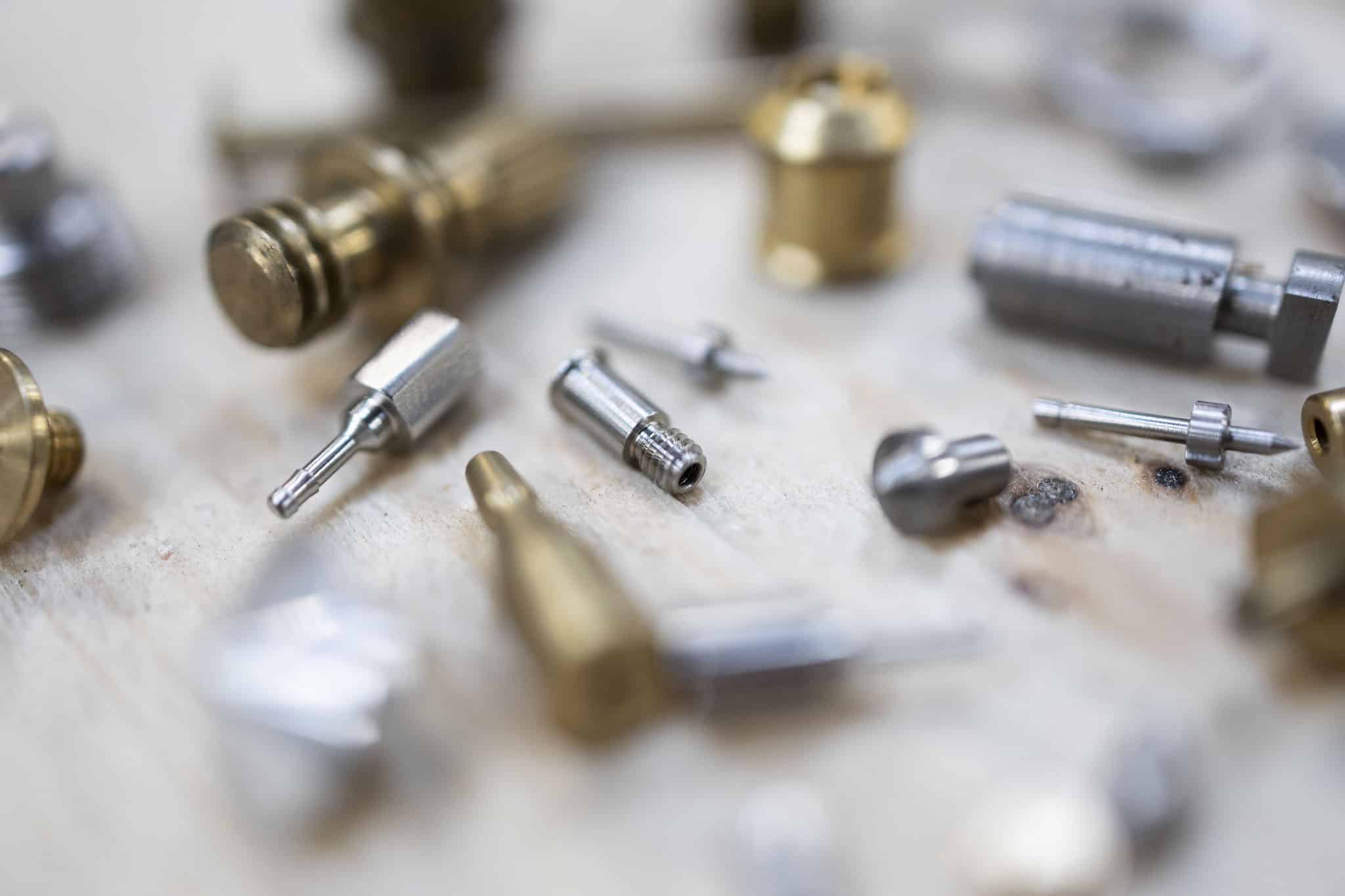
Machining is a collective term for manufacturing methods in which a cutting tool removes material from a workpiece in the form of chips. The workpiece typically starts as bar stock or a metal blank and is machined to its finished geometry through one or more operations.
It is the most widely used method for manufacturing precision metal components because it combines high accuracy, good surface finishes and great flexibility – from small batches to high-volume series production.
The three basic methods are turning, milling and grinding. In modern production, machines are controlled by CNC (Computer Numerical Control), ensuring that every part is machined in exactly the same way – regardless of batch size. See how we offer machining as a subcontractor.
The four main types of machining
CNC turning
The workpiece rotates while a clamped tool removes material. Ideal for cylindrical parts such as shafts, bushings and fittings – in batches of 25 parts and upwards on multi-spindle automatic bar lathes.
Read moreCNC milling
A rotating tool machines a clamped workpiece. Suitable for prismatic parts, pockets, threads and complex 3D geometries with high precision.
Read moreCNC grinding
Finishing with a grinding wheel, using cylindrical grinding for cylindrical surfaces and surface grinding for flat surfaces. This method delivers the tightest tolerances and finest surface finishes.
Read moreMulti-spindle turning
Several spindles machine parts simultaneously, resulting in very low unit prices for large production runs. Our 6-spindle machines are built for precisely this.
Read moreWhich method suits your part?
The choice depends on the part's geometry, tolerance requirements, surface requirements and batch size. Methods are often combined – for example, turning followed by cylindrical grinding when tolerances are tight. If you are unsure, we will be happy to help assess the most economical solution based on your drawing.
| Your requirements | Recommended method |
|---|---|
| Cylindrical parts (shafts, bushings, pins) | CNC turning |
| Prismatic parts, pockets and complex geometries | CNC milling |
| Tight tolerances and a fine finish on cylindrical surfaces | Rundslibning |
| Flat reference surfaces with high flatness | Planslibning |
| Large production runs with low unit prices | Multi-spindle turning |
| Parts requiring documented cleanliness | Machining + washing and packing |
Materials we machine
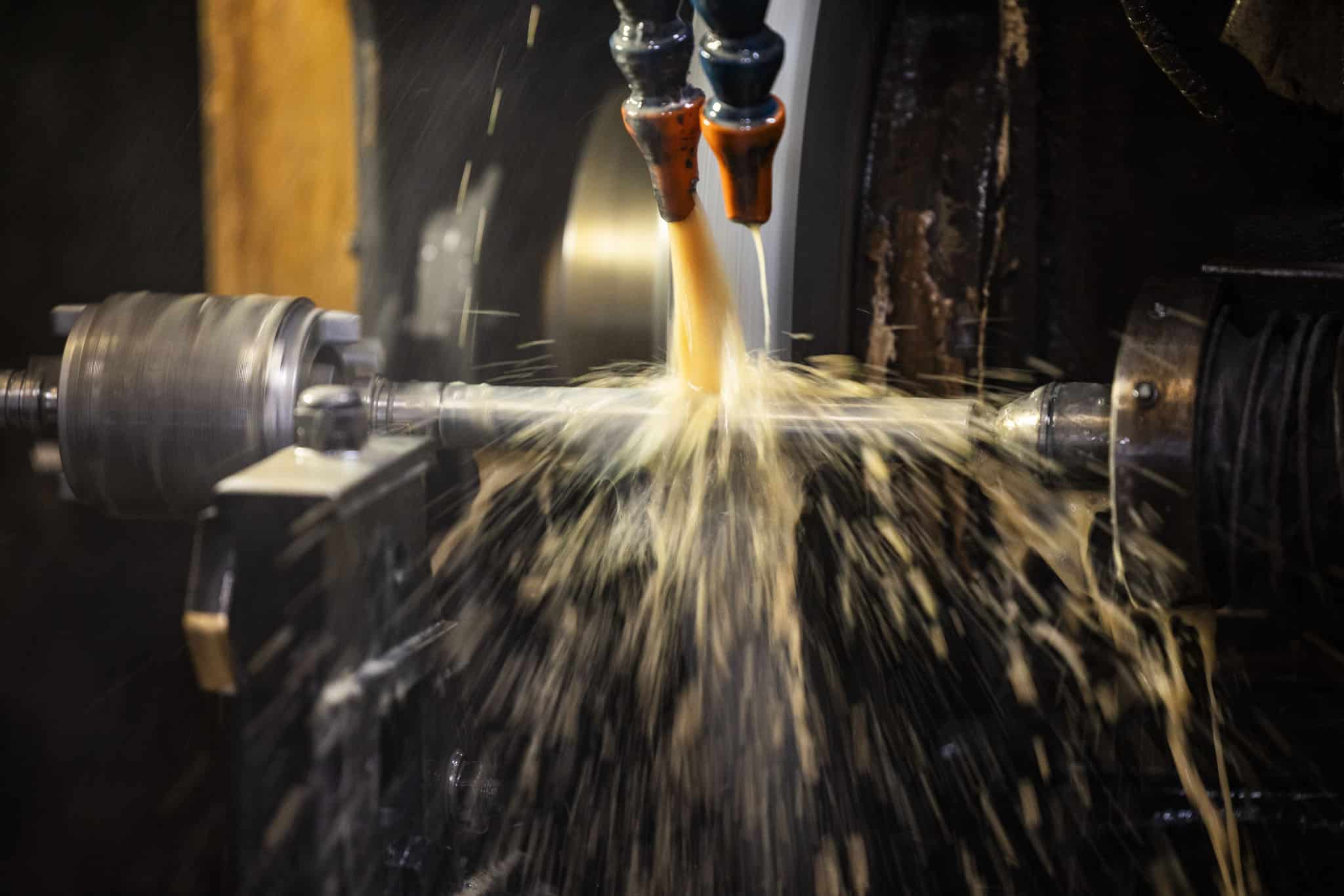
- Steel and free-cutting steel
- Stainless steel
- Aluminium
- Brass and bronze
Frequently asked questions about machining
What is machining?
Machining is a collective term for manufacturing methods in which material is removed from a workpiece in the form of chips – typically by turning, milling or grinding. These methods are used when high precision and good surface finishes are required in metal.
Which materials can be machined?
Most metals can be machined – including steel, stainless steel, aluminium, brass and bronze. The choice of material depends on requirements for strength, corrosion resistance and price.
When should I choose grinding over turning or milling?
Grinding is chosen when tolerances and surface finish requirements are tighter than turning and milling can achieve – typically as a finishing operation after prior turning or milling. Cylindrical grinding is used for cylindrical surfaces and surface grinding for flat surfaces.
Is machining cost-effective for large production runs?
Yes. Multi-spindle CNC automatic bar lathes machine several parts simultaneously, delivering short cycle times and low unit prices – even for production runs of many thousands of parts.
Shall we machine your next part?
Send us your drawing or a brief description – we will get back to you promptly with a price and delivery time. ISO 9001:2015-certified quality from Ullerslev on Funen.
Get a quote